
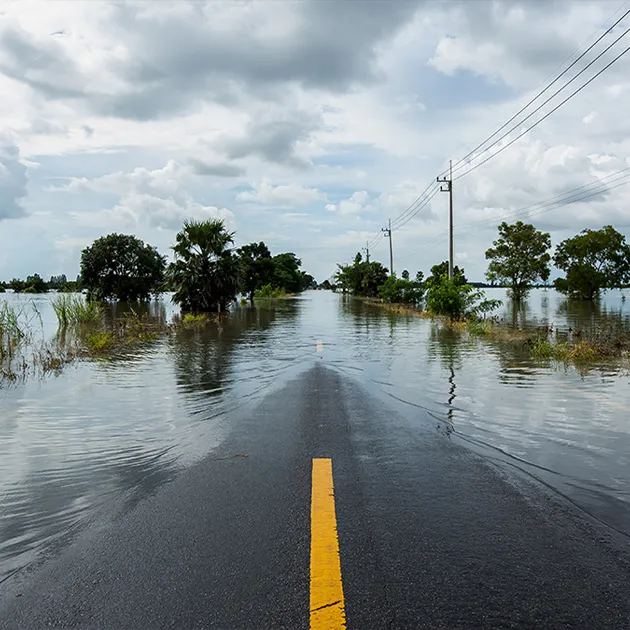
While cyber incidents are already a top concern for most business leaders, organizations are simultaneously facing a dramatic uptick in physical incidents that have the potential to impact their people and operations. Leaders in risk, security, and business continuity know all too well that these threats, such as extreme weather events and infrastructure failures, continue to become more frequent and interconnected.
Recent research from my company, OnSolve, shows that C-level leaders are also beginning to understand these risks, but 18% of CEOs admit they still don’t have anyone in the C-suite overseeing physical security and duty of care. Physical threats often have cascading effects that reach all areas of the business, so preparing for them can no longer be a siloed responsibility that’s relegated to mid-level management — it’s a critical element of organizational resilience that leaders must learn to recognize and measure.
But a simple ROI calculation won’t cut it for physical risk prevention and mitigation investments because they can’t be measured by increases in revenue. In a world of increasing physical threats, a financially sound business strategy requires a focus on return on resilience investment (RORI), which shows in monetary terms what damage was avoided, not what income was gained.
The Quantifiable Benefits of Resilience
From 2021 to 2022, extreme weather events were up 42% in the U.S. and 72% globally. During the same time frame, infrastructure and technology failures (including power outages) soared 807% in the U.S. and 688% globally, and transportation accidents (aircraft, maritime, rail, and road) increased 296% in the U.S. and 211% globally…..